

Clover Hill Dairy Cheese Recalled Over Listeria Risk
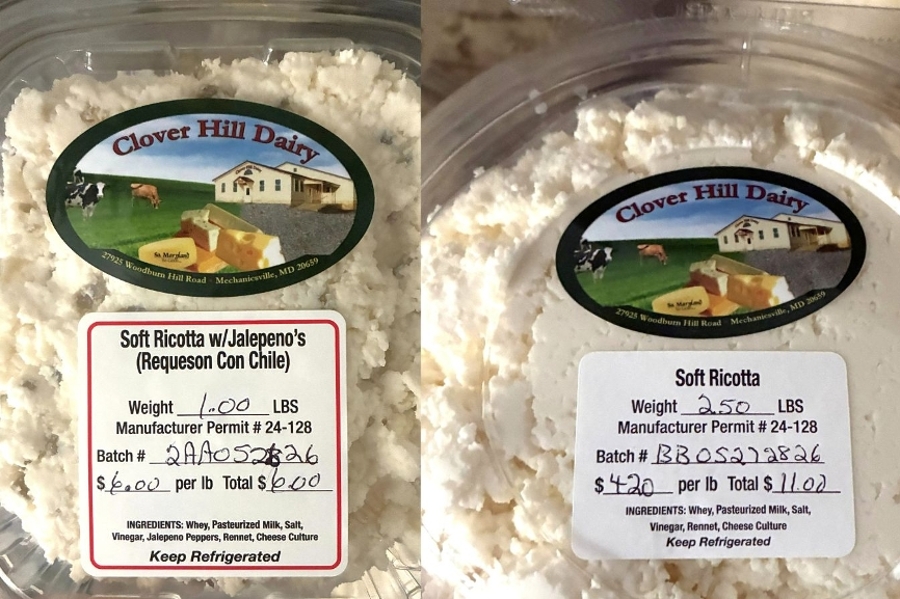
State of MD - Maryland health officials are warning consumers to stop eating, selling, or serving certain soft cheese products from Clover Hill Dairy in Mechanicsville, Maryland.
The Maryland Department of Health announced the dairy has issued a voluntary recall of its requesón and soft ricotta cheese products. The concern is possible contamination with Listeria monocytogenes, a dangerous bacteria that can cause serious illness.
If you've bought cheese from Clover Hill Dairy recently, check the package carefully. The manufacturer permit number on the label should read "24-128." Some products may carry a different brand name if they were sold through a third-party distributor, so that number is the key thing to look for.
Clover Hill Dairy products are sold at their own retail market, at farmers markets, and through distributors in Maryland, New York, and Virginia. Some varieties include jalapeño or other flavors.
Because of the public health risk, the Maryland Department of Health has suspended the dairy's operating license while an investigation is underway.
Listeria is a bacteria that can grow in food even when it's refrigerated. That's what makes it particularly tricky. It can spread easily to other foods and surfaces, and yes, even your pets can carry it if they eat contaminated food.
When someone gets sick from Listeria, it's called listeriosis. Mild symptoms include fever, muscle aches, nausea, vomiting, and diarrhea that can last one to three days. More serious cases can bring on headaches, a stiff neck, confusion, loss of balance, and even convulsions.
Listeriosis is especially dangerous for pregnant women, newborns, young children, older adults, and anyone with a weakened immune system.
Most people start feeling symptoms within a few days of eating contaminated food, but it can take up to two months in some cases. If you think you may have eaten one of these products and aren't feeling well, call your doctor right away.
One more thing worth knowing: even soft cheeses made from pasteurized milk can still become contaminated with Listeria after the pasteurization process. So don't assume a product is safe just because it used pasteurized milk.
If you have any of these products at home, don't eat them. Throw them away.