

Delaware Announces 2026 PFAS Plan & Contaminants Framework
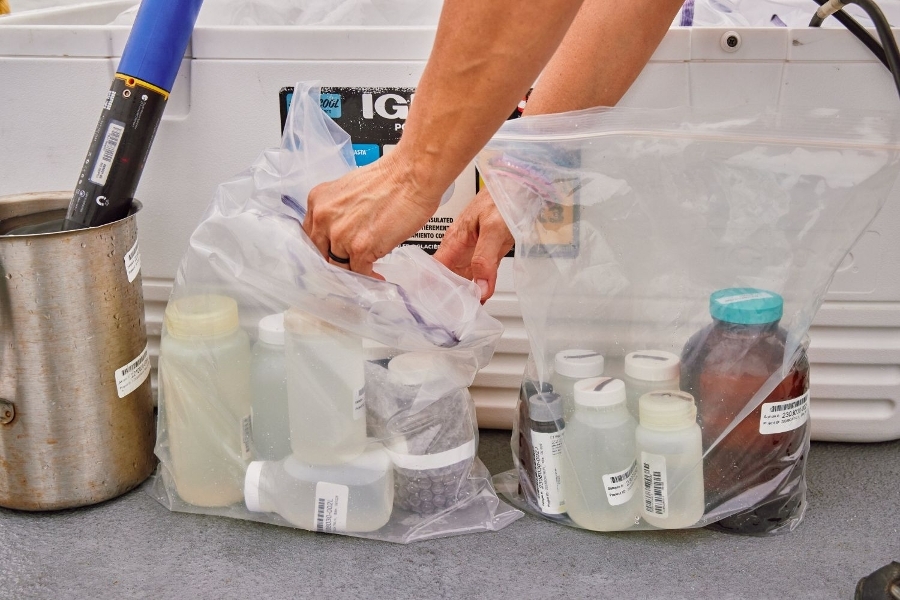
State of DE - The 2026 Strategic Framework for Contaminants of Emerging Concern and the 2026 PFAS Implementation Plan were released today. The documents were announced jointly by the Delaware Department of Natural Resources and Environmental Control (DNREC), the Division of Public Health (DHSS-DPH), and the Delaware Department of Agriculture (DDA).
A coordinated, science-based approach is established by these two documents. Risks from various chemicals threatening Delaware's environment, drinking water, food supply, and public health will be identified, assessed, and reduced. The plans are guided by stakeholder involvement, strategic prioritization based on risk and resources, and an adaptive management approach. This allows the state to respond to new scientific data and emerging threats.
Goals for contaminants of emerging concern (CECs) are established by the Strategic Framework. CECs are naturally occurring or human-made substances known to pose risks to people and wildlife. Examples include PFAS, microplastics, pharmaceuticals, and pesticides.
Interagency coordination is required for many CECs because they lack established regulatory standards. Guiding principles are set, agency roles are assigned, performance indicators are established, and the state is committed to annual progress updates by the new framework.
The PFAS Implementation Plan is the first plan released under this framework. Goals are established for reducing perfluoroalkyl and polyfluoroalkyl substances (PFAS). These synthetic chemicals are found in non-stick coatings, firefighting foams, and food packaging.
They are commonly referred to as "forever chemicals" because they persist in the environment and the human body. A decade of action regarding PFAS contamination in Delaware is formalized and expanded upon by this plan.
Several key milestones are documented in the PFAS Implementation Plan. Legislation establishing public notification requirements for PFAS detections in public water systems is planned for 2025. PFAS-containing firefighting foam was reclaimed in 2023.
Statewide sampling of source water was conducted in 2022, and watershed-focused surface water sampling occurred in 2024. Wastewater treatment media and wild fish and game are sampled continuously.
A continuing medical education course on PFAS exposure was launched in September 2025. A public awareness survey was subsequently released in November 2025. Community outreach grants were originated in 2026 to help residents reduce exposure.
A free private well testing program is expected to launch later this year. High-priority PFAS are regulated by DNREC through the Hazardous Substance Cleanup Act (HSCA) to compel responsible parties to address environmental releases. Funding for these actions is primarily provided by a trust created from a 2021 legal settlement with DuPont, Chemours, and Corteva.
Further actions are outlined across six strategy areas in the PFAS Implementation Plan. These areas include protecting public health, assessing contamination sources, eliminating sources, engaging the public, strengthening communications, and ensuring emergency preparedness.
Responsible state agencies, projected timelines, and prioritization rationales are identified for each action. The plans are available on the DNREC website. Annual progress updates will be published by the state.
Photo Credit: DNREC