

New Delaware Law Speeds Up Dock, Utility Permits
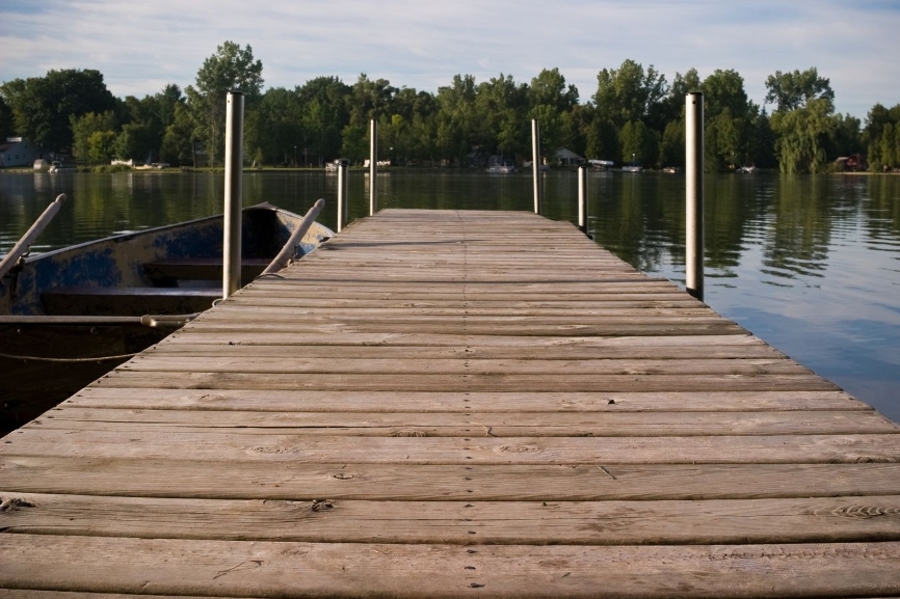
State of DE - Delawareans who need permits for docks, utility lines or other work on the state's submerged lands and tidal waters will soon see faster decisions. Governor Matt Meyer signed House Bill 456 into law last week, updating Delaware's Subaqueous Lands Act.
The law covers permits for activities on riverbeds, lake bottoms, streams and tidal lands. It was sponsored by Rep. Cyndie Romer, Rep. Ronald Gray and Sen. Kyra Hoffner, and is part of a larger push by Governor Meyer and DNREC to improve environmental permitting.
"We are cutting the time Delawareans can expect for a straightforward dock permit or a utility line crossing, with clear timelines and more certainty for applicants," Governor Meyer said. "DNREC water permitting staff has been identifying ways to improve, and that's what effective, responsive government looks like."
DNREC Secretary Greg Patterson also spoke about the new law. "We've made permitting reform a real priority and this bill reflects the work of our expert staff alongside General Assembly members who heard from businesses and property owners about where the system needed to change," he said. "Thanks to their thoughtful evaluation of permit processes, Division of Water staff identified ways to reduce time and steps in some areas so they can focus on others where we can have the most impact protecting Delaware's water resources."
The new law sets firm timelines for small residential docking structures, meaning private docks of no more than 300 square feet. DNREC must tell applicants within 30 days whether their application is complete.
If DNREC does not issue or deny a permit within 120 days of receiving a complete application, the permit is automatically granted. This only applies if a licensed contractor or consultant has certified the project is safe, does not disturb navigation, does not affect neighboring riparian rights and does not block public access to the water.
House Bill 456 also expands the use of general permits. These permits cover routine, lower impact projects across the state instead of requiring individual reviews for each one.
New general permits will cover linear utility lines such as water, sewer, stormwater and telecommunications. They will also cover small residential docks, voluntary habitat restoration projects, minor road crossings, minor bank stabilization, navigational aids and signage, and the use of pilings in nontidal waters under certain conditions.
Starting September 19, projects on private nontidal lands that already have a U.S. Army Corps of Engineers Nationwide Permit and a state Water Quality Certification will be exempt from state subaqueous review.
This change removes duplicate reviews for the same project.
The law also allows the DNREC Secretary to hand off certain permitting decisions to department staff. Before this change, the Secretary had to personally sign every subaqueous lands lease, but leases of 2,500 square feet or less can now be approved by staff.
House Bill 456 creates a new Marine Contractors and Consultants Licensing Board to help DNREC oversee people and companies working on submerged lands or tidelands. The seven member board will be chosen by the DNREC Secretary.
DNREC will keep full licensing authority and will write the rules for both the licensing program and the board. Six months after those rules are finished, anyone applying for a permit will need to work with a board licensed contractor or consultant.
The licensing board answers a request Delaware's marine contracting industry has made for years, asking for a state credential system similar to what neighboring states already have. The goal is to raise the quality of applications and cut down on back and forth delays during reviews.
This law builds on other changes already underway at DNREC's Division of Water. The Residential Services Section launched online dashboards that let homeowners, contractors and the public check the status of an application, see their place in line and pull up issued permit documents.
DNREC's Wetlands and Waterways Section expanded its Statewide Activity Approval program to include more low impact activities, giving qualifying projects a faster path to approval. The section also issued its first General Permit, which offers a quicker way to add a floating dock, boat lift or kayak float within an existing slip at a permitted docking structure on Delaware's tidal lands.
The Wetlands and Waterways Section built an interactive Application Wizard as well. It helps applicants figure out the right permitting path for their project, cutting down on confusion during the process.