

Supreme Court Limits Asylum Claims at the Border
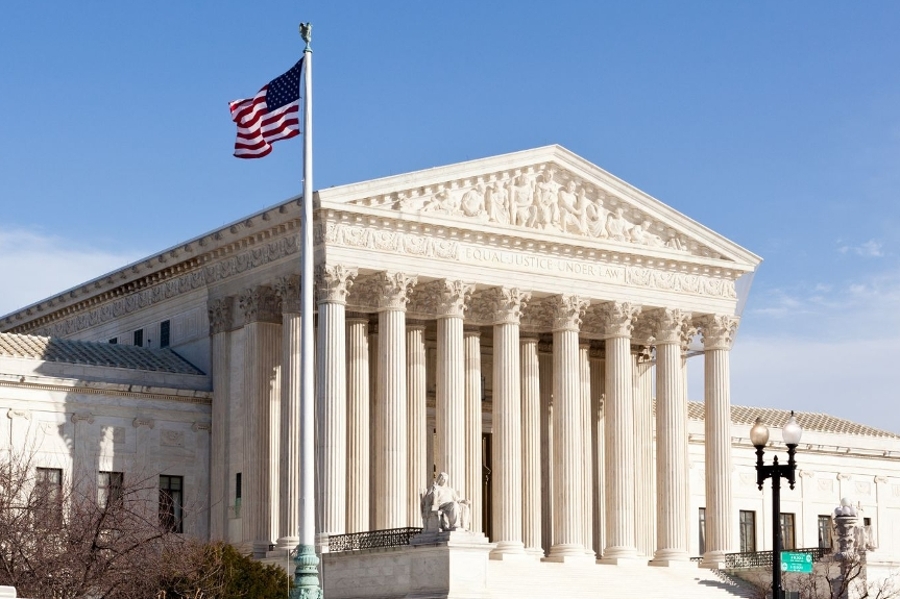
National News - The U.S. Supreme Court ruled today that migrants standing on the Mexican side of the border haven't legally "arrived" in the United States, even if they're trying to enter. That means they can't yet claim a right to asylum screening under federal law.
The 6-3 decision came in Mullin v. Al Otro Lado, a case challenging the government's old "metering" policy. Metering let border officers limit how many migrants they processed each day, sometimes turning people back at the line before they could ask for asylum.
Justice Samuel Alito wrote the majority opinion. He said the law is pretty simple on this point. "An alien 'arrives in the United States' only when he crosses the border," Alito wrote.
The Court leaned on everyday logic to make its case. Alito wrote that "a running back does not arrive in the end zone... when he is tackled at the 1-yard line by the defense." He used similar comparisons involving a houseguest and a piece of mail to explain the reasoning.
Not everyone on the bench agreed. Justice Sonia Sotomayor wrote a sharp dissent, joined by Justices Elena Kagan and Ketanji Brown Jackson. She argued the ruling lets border officers sidestep the law entirely just by physically blocking people from stepping across.
Sotomayor warned the decision could have real consequences. "More people will die," she wrote. "More people will attempt to cross the border illegally, and some will make it while others will not."
Justice Jackson also wrote her own separate dissent. She argued the Court shouldn't have taken up the case at all, since the metering policy was dropped back in 2021. She called the ruling "an advisory opinion on the lawfulness of metering... that has not been in place for almost five years."
The metering policy at the center of this case began in 2016 as a way to manage overcrowding at border crossings. The government ended the practice in November 2021, shortly after a lower court ruled it unlawful.
This ruling reverses a Ninth Circuit decision that had sided with migrants and advocacy groups.
The case now heads back to the lower courts for further proceedings.
Source: Supreme Court Decision