

Red Knots Found a Safe Haven in Delaware This Spring
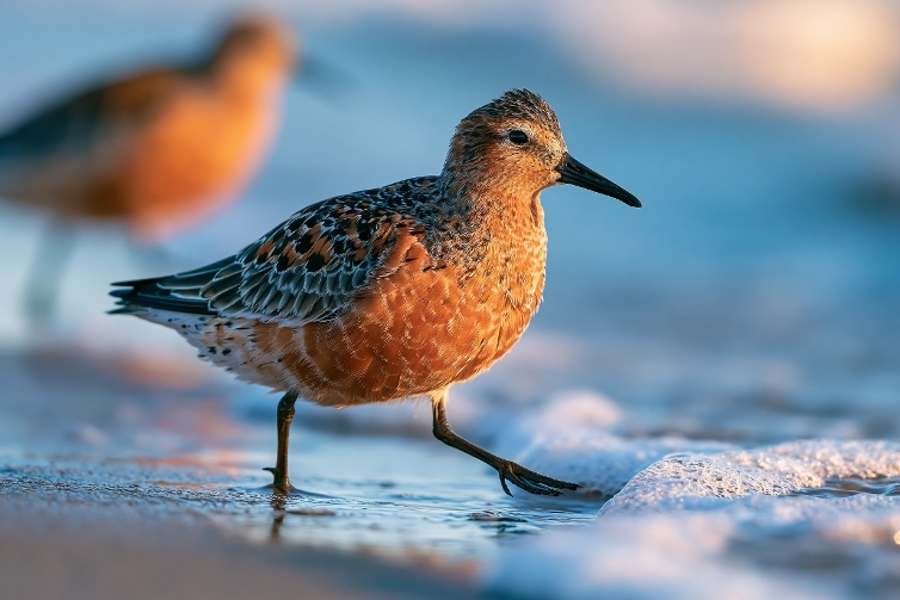
State of DE - Red knots are small shorebirds that fly thousands of miles every spring. This year, many of them found exactly what they needed in Delaware.
The Delaware Shorebird Project counted nearly 2,000 red knots in Mispillion Harbor on May 11. That number kept climbing, with harbor counts topping 1,000 birds regularly and reaching 3,000 by May 20.
Unlike recent years, the red knot flocks stayed in Delaware through the whole season. In the past, birds have tended to move toward New Jersey instead.
Researchers also tracked how much weight the birds were gaining. Between May 10 and May 30, they weighed 377 red knots and found the birds were putting on weight faster than usual.
On May 21, 10 out of 35 birds captured weighed more than 180 grams. That is the estimated minimum weight red knots need before they can continue their migration.
By the end of May, weights were closer to normal. Early arriving birds had fattened up and left, while new, thinner birds kept arriving, creating a nearly 120 gram difference between the lightest and heaviest birds caught on May 30.
For several years, red knot counts along the Delaware coast have been dropping, even though overall population estimates for Delaware Bay stayed fairly stable. Many birds have shifted toward the New Jersey shore, where wide stretches of protected marsh sit next to good feeding beaches.
New Jersey's coastal waters also tend to warm faster, which means horseshoe crabs there often start spawning earlier. This year, New Jersey saw its highest red knot counts in recent history, and Delaware's counts rose right along with them.
A colder spring in 2026 changed the usual timing of horseshoe crab spawning across the bay. Mispillion Harbor, a restored habitat built to support both horseshoe crabs and shorebirds, warmed up earlier than most other spots along the bay shore.
That early warming meant Mispillion Harbor became one of the first places with horseshoe crabs ready to spawn. Some of the season's earliest red knot flocks settled in right along with them.
"These findings indicate that complex factors such as migration timing, habitat conditions, animal behavior, and the availability of suitable feeding and roosting areas interact with overall horseshoe crab abundance in determining where red knots concentrate each spring," said Delaware Shorebird Project leader and DNREC Coastal Waterbird Biologist Kat Christie. "While horseshoe crab spawning density in Mispillion Harbor was not noticeably different this year than years where red knots were largely absent from the shorebird flocks there, the red knot response to it was like night and day."
Researchers with the project use small leg flags to track individual birds throughout their migration. This season, they flagged 343 red knots in Delaware, recaptured several dozen more, and logged nearly 4,000 red knot sightings.
Some of those birds were originally banded in Delaware, New Jersey, Argentina, Brazil and Canada. The project also flagged 511 ruddy turnstones, 288 sanderlings and 193 short-billed dowitchers, and placed satellite trackers on eight ruddy turnstones as part of a three year tracking effort.
In total, researchers logged more than 22,500 flagged shorebird observations this season. Mispillion Harbor has long been one of Delaware's most important feeding areas for shorebirds.
This year showed just how valuable that habitat can be when conditions turn tough elsewhere. DNREC biologists say the season offers useful lessons for protecting shorebird habitat in Delaware Bay going forward, no matter what each year brings.
2.jpg)